

A developer looking for a natural food color manufacturer usually has more to solve than a shade match. The color has to suit the recipe, survive the process, and remain dependable when production moves beyond the lab. FoodRGB works with food, beverage, and nutraceutical manufacturers and offers natural colors in several formats, including liquids, powders, and oil-based systems. That range matters because one format may disperse cleanly in a drink while another is better suited to a coating, seasoning, or fat-rich product during routine commercial production runs.
Start With the Product Conditions
Before discussing a specific pigment, it helps to describe the product in practical terms. What is the pH? Will the formula be heated, frozen, or exposed to light? Is the base mostly water or fat? These details quickly rule some options in or out. FoodRGB also offers custom formulations, which can be useful when a standard color is close but does not quite fit the process. Sharing real production conditions early gives the supplier a better chance of recommending something that can work beyond a small bench sample.
Red Radish Offers a Flexible Red Range
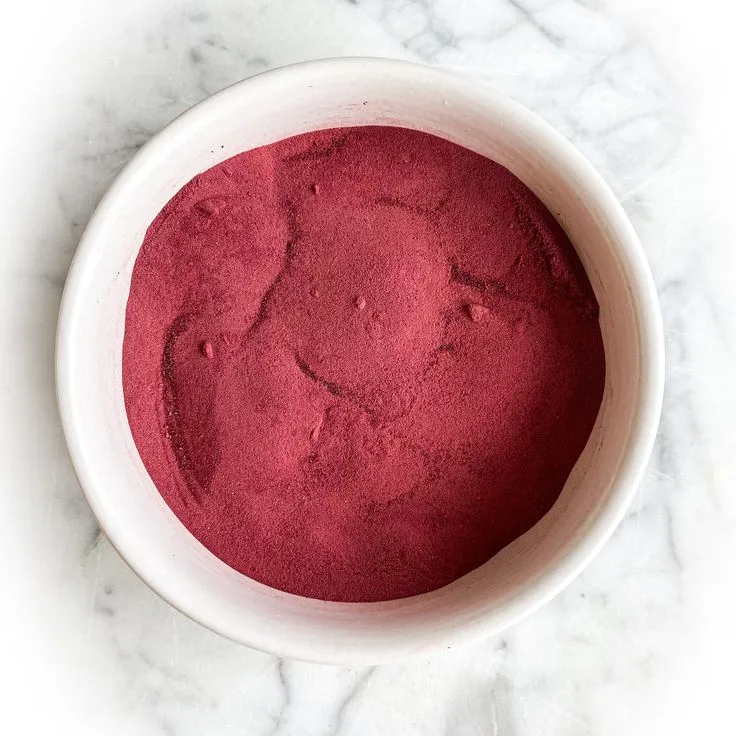
Red radish is one option for manufacturers looking for red, crimson, or fuchsia tones. FoodRGB lists betanin as the key pigment and describes the color as water-soluble, with good performance across roughly pH 3.0 to 8.0. The company offers several powder strengths, liquid options, an oil format, and custom formulations. That variety gives developers room to test the same color source in different product types instead of assuming one concentration or physical form will suit every recipe they are developing during early commercial development work.
Powder Form Can Be Practical
For some production lines, red radish powder is easier to dose, store, and blend than a liquid color. FoodRGB lists multiple powder concentrations, including an option developed with improved heat stability. That does not remove the need for testing. The company’s own FAQ notes that standard Radish Red is heat resistant rather than fully heat stable. A bakery or confectionery team should therefore run the color through the real heating step, while a beverage developer may focus more on acidity, light exposure, and shelf performance.
Applications Are Broader Than They Look
FoodRGB lists Radish Red for beverages, confectionery, ice cream, seasonings, baked goods, snacks, frozen foods, fruit preparations, jelly, popcorn, plant-based meat, and several savory applications. That is a wide range, but it should not be read as a guarantee that one version works identically everywhere. A pale beverage and a dense plant-based product will show color very differently. Developers still need to look at opacity, ingredient interactions, and the amount of color required to reach the intended appearance without making the product look unnaturally intense.
Real Processing Tells the Truth
A useful color trial follows the same path as the finished product. If the recipe will be pasteurized, baked, frozen, or mixed for a long period, the test should include those steps. It also helps to check the sample again after storage rather than making a decision on the first day. Light, oxygen, temperature, and packaging can change what the customer finally sees. A color that looks excellent immediately after mixing may not be the best choice if its appearance drifts after several weeks on the shelf.
Scale-Up Needs More Than a Bigger Batch
Moving from a beaker to commercial equipment changes mixing time, shear, holding time, and the way ingredients meet each other. A pigment that disperses evenly in a small trial can behave differently in a production tank or coating drum. This is where technical support becomes useful. Manufacturers can compare addition order, concentration, and format before locking the formula. The goal is not simply to reproduce the strongest possible red, but to find a shade that can be made consistently from one production run to the next without unnecessary adjustments.
Conclusion
Choosing natural color works best when the manufacturer starts with the product conditions and then narrows the pigment options. Red radish offers useful red-to-fuchsia possibilities, along with several physical formats, but its performance still needs to be proven in the real recipe and process. Manufacturers can use foodrgb.com to review natural color systems and product-specific support. A good result is not just a strong first sample; it is a color that mixes reliably, survives normal production, and still looks right when the finished product reaches the customer.