

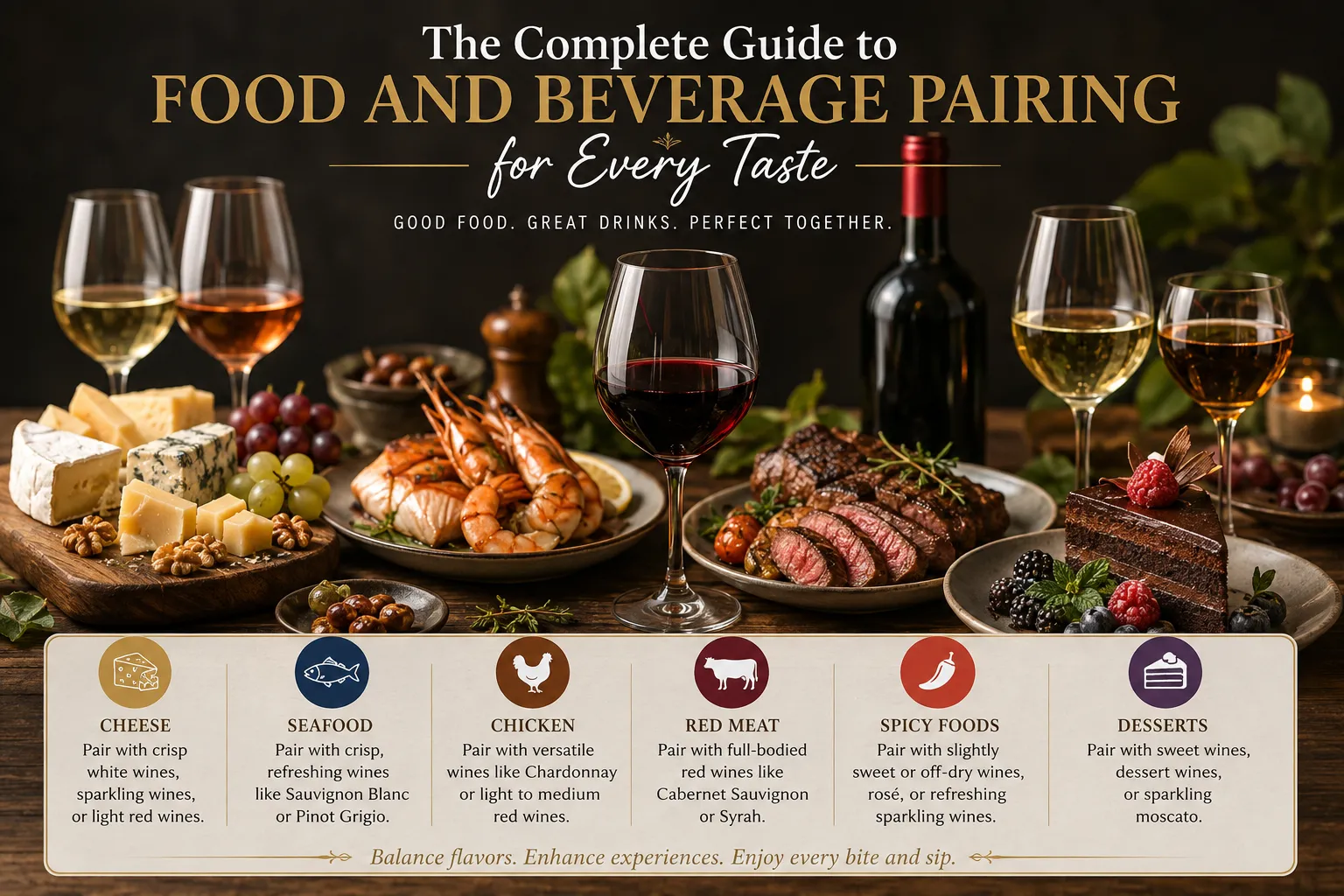
Food and beverage pairing is about more than following traditional rules. The right combination can bring out hidden flavors, balance richness, and turn an ordinary meal into a more memorable experience. Whether you are planning an elegant dinner, hosting friends, or choosing a thoughtful gift for a food lover, understanding how different flavors work together can make every occasion feel more special.
From creamy cheeses and grilled meats to desserts and spicy dishes, there is a pairing for almost every palate. This complete food and beverage pairing guide explores simple principles that can help you create combinations that taste balanced, enjoyable, and intentional.
Why Food and Beverage Pairing Matters
Every food has its own combination of sweetness, acidity, saltiness, bitterness, richness, and texture. Beverages can either complement those characteristics or create an appealing contrast.
For example, a rich and creamy dish often benefits from a beverage with refreshing acidity. Spicy foods can work well with something slightly sweet, while grilled or roasted dishes often pair beautifully with beverages that have deeper, more developed flavors.
The goal is not always to find identical flavors. Sometimes the most successful combinations come from contrast. A crisp beverage can refresh the palate after a rich bite, while a fuller-bodied option can stand up to bold ingredients.
Start with the Main Flavor of the Dish
When choosing a beverage, begin by identifying the dominant flavor in your meal. Is the dish rich, spicy, salty, sweet, acidic, smoky, or savory?
Rich foods such as creamy pasta, buttery seafood, and soft cheeses generally work well with beverages that provide freshness. Light dishes, including salads and grilled vegetables, often pair nicely with crisp and delicate choices.
For bold foods such as barbecue, roasted meats, and heavily seasoned dishes, consider beverages with enough body and character to complement the intensity. The beverage should not disappear behind the food, but it should not overpower it either.
Pairing Beverages with Cheese
Cheese offers countless pairing opportunities because varieties can range from mild and creamy to sharp, salty, and intensely flavored.
Fresh cheeses such as mozzarella, ricotta, and chèvre can work well with lighter, refreshing beverages. Semi-soft cheeses, including Brie and Camembert, pair nicely with options that have enough acidity to balance their creamy texture.
For stronger cheeses, look for beverages with more pronounced flavor. Aged cheddar, blue cheese, and other intensely flavored varieties can benefit from richer or slightly sweet pairings.
When preparing a cheese board for guests, offering several beverage styles can make the experience more interactive. Add fresh fruit, nuts, crackers, and preserves to create different combinations with each bite.
Pairing Beverages with Seafood
Seafood often benefits from beverages that highlight its delicate flavors rather than covering them up. Grilled fish, shrimp, oysters, and lighter seafood dishes typically pair well with crisp, refreshing selections.
For richer seafood dishes, such as lobster with butter or creamy seafood pasta, choose something with enough acidity to cut through the richness. The contrast can keep each bite feeling fresh.
Smoked seafood introduces another dimension. Its savory and smoky character can work particularly well with beverages that have enough flavor to complement those deeper notes.
Pairing with Chicken and Poultry
Chicken is one of the easiest foods to pair because its flavor changes significantly depending on preparation.
Roasted chicken with herbs can work well with a balanced, medium-bodied beverage. Cream-based chicken dishes often benefit from something refreshing enough to offset the sauce, while grilled chicken can handle more robust flavors.
For spicy chicken recipes, consider a beverage with some sweetness or refreshing acidity. This can help balance heat without competing with the seasoning.
Pairing with Red Meat
Steak, roast beef, lamb, and other red meats generally have bold flavors and satisfying richness. They often pair best with beverages that have enough structure and intensity to complement the dish.
Grilled steak, for example, can work beautifully with a full-bodied red wine. Roasted meats may pair well with earthy or fruit-forward options, depending on the seasoning and sauce.
The cooking method also matters. Charred and grilled foods introduce smoky flavors, while slow-cooked meats can develop rich, savory characteristics. Consider those details rather than choosing a beverage based only on the type of meat.
Pairing with Spicy Foods
Spicy foods can be challenging because intense heat can make certain beverages taste more alcoholic or bitter. A refreshing beverage with a touch of sweetness can often provide a better balance.
For spicy Asian dishes, Mexican cuisine, Indian curries, or hot barbecue sauces, look for beverages that refresh the palate and soften the sensation of heat.
Acidity can also be helpful. It cuts through rich sauces and keeps the palate lively between bites.
Pairing with Desserts
Dessert pairings should take sweetness into consideration. As a general rule, the beverage should be at least as sweet as the dessert. Otherwise, the food can make the beverage seem flat or overly dry.
Chocolate desserts can work with rich, fruit-forward, or fortified beverages, depending on the intensity of the chocolate. Fresh fruit desserts often pair well with lighter and more aromatic choices.
For creamy desserts such as cheesecake or crème brûlée, consider beverages that provide either complementary richness or refreshing acidity.
Turning Pairings into Thoughtful Gifts
Food and beverage pairings are also a practical way to choose gifts for people who enjoy entertaining. Instead of selecting a single item, consider creating a combination that gives the recipient everything needed for an enjoyable tasting experience.
A napa valley wine gift basket can be an appealing choice for someone who enjoys California wines and gourmet foods. Look for a basket that combines thoughtfully selected wine with complementary treats such as artisan cheese, crackers, chocolate, nuts, or other specialty foods. This type of gift can work particularly well for birthdays, anniversaries, corporate celebrations, housewarmings, and dinner invitations.
For someone who appreciates European flavors, a french wine gift basket can offer a similarly sophisticated gifting experience. Pairing French wine with gourmet cheese, chocolates, crackers, or savory snacks creates a collection that encourages the recipient to explore different flavor combinations. It can make an excellent choice when you want to buy a refined gift for a celebration, thank-you occasion, client, host, or wine enthusiast.
How to Build a Balanced Pairing Experience
If you are planning a dinner or tasting event, variety is key. Avoid choosing foods and beverages that are all equally heavy or intense. Instead, create a progression that allows the palate to experience different flavors.
Begin with lighter foods and refreshing beverages before moving toward richer dishes and fuller-bodied selections. Include contrasting textures and flavors throughout the meal.
Presentation also matters. Serve beverages at appropriate temperatures, use suitable glassware when available, and give guests enough time to taste each pairing separately before combining them.
Most importantly, do not be afraid to experiment. Traditional pairing suggestions are useful starting points, but personal preference should always have the final say.
Final Thoughts
A successful food and beverage pairing does not need to follow complicated rules. Start by considering the intensity, texture, acidity, sweetness, and dominant flavors of the food, then choose a beverage that either complements or pleasantly contrasts those characteristics.
Whether you are planning a casual meal, hosting a celebration, or shopping for a sophisticated food and beverage gift, thoughtful pairings can make the experience more enjoyable. Once you understand the basic principles, experimenting with new combinations becomes part of the fun—and you may discover pairings that become personal favorites.